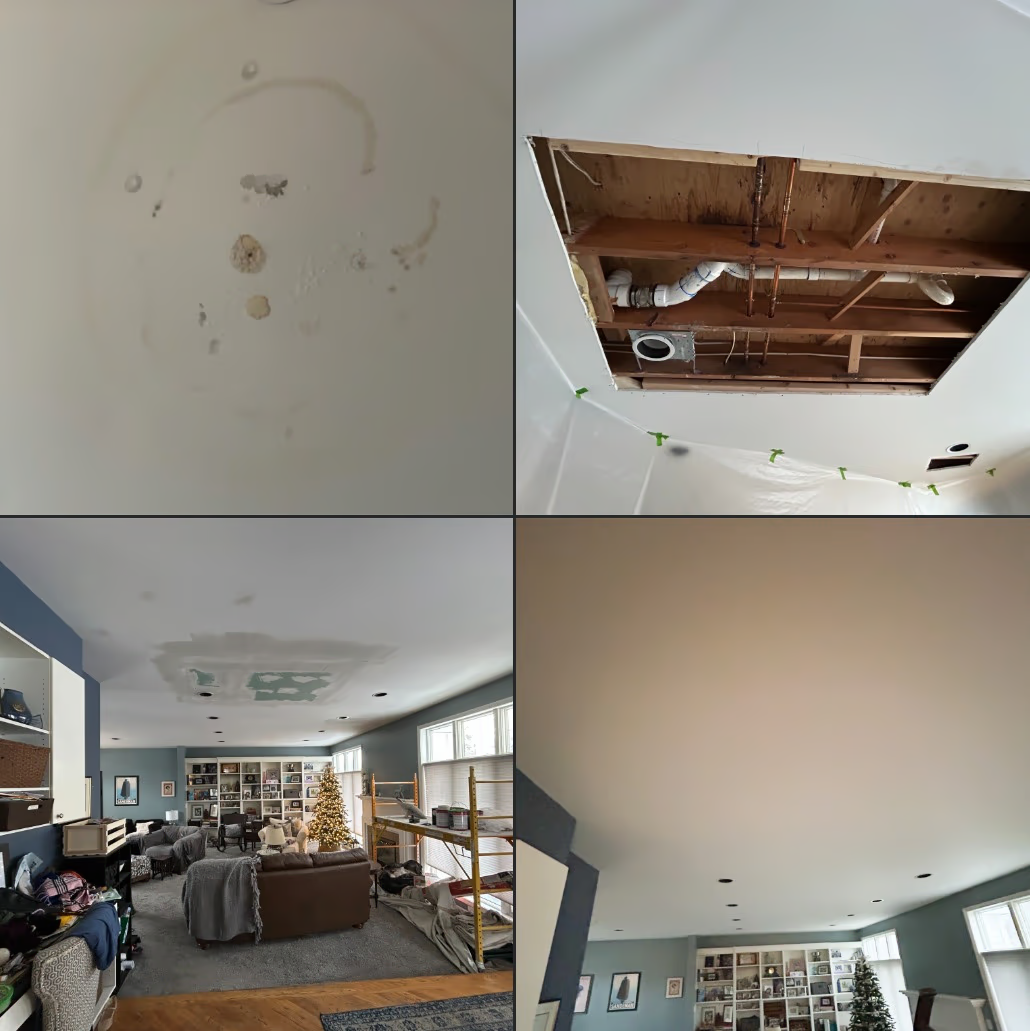
Plaster Restoration
We routinely document the restoration of water-damage and efflorescence, plaster bulges, cracks, blown-out plaster, surface refinishing, and preparation for decorating.
Explore plaster repair servicesWhen it comes to restoring your interior walls and ceilings its important to hire the correct company for the job. While many well known abatement and mitigation companies are out there, very few complete the restoration of the surfaces they remove after the fact. This leaves homeowners wondering who to call to put their house back together.
We have extensive documented experience working with drywall and traditional plaster systems popular around Buffalo NY. Not only do we replace what was removed, we also perform the painting after the walls and ceilings have been repaired ensuring the most seamless restoration possible and leaving the client with a ready to use space once our work is complete.
Request an Estimate View Documented Restorations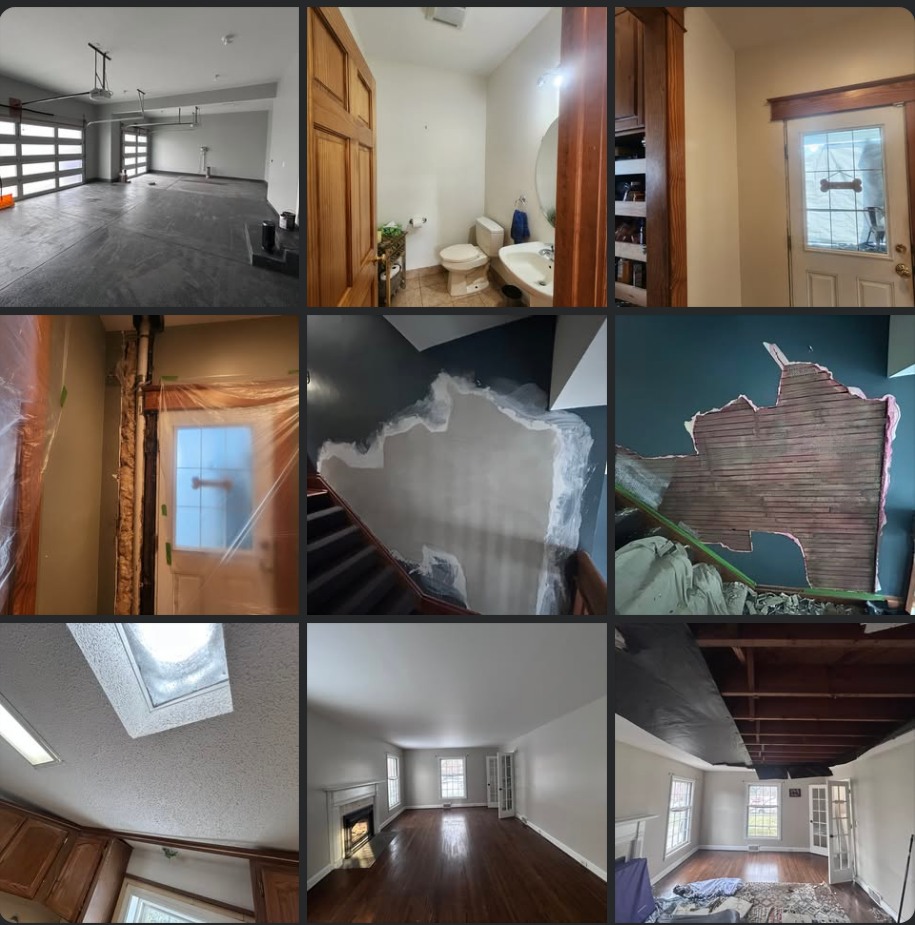


The Carrigan Archives defines drywall and plaster restoration as the process of restoring damaged walls and ceilings using materials that are compatible with the materials already installed in the home. The goal is not simply to hide a crack, cover up water damage, or attach drywall over a failing plaster ceiling.
The art of plaster and drywall restoration begins with understanding how your home was constructed and how the existing wall or ceiling system was originally integrated into the structure. We then select compatible materials, to ensure the damage is repaired correctly and will stand the test of time. Understanding how the damage occurred is equally important to ensure we aren't repairing the effects of an on going problem such as a roof leak. Restoring a water-damaged wall or ceiling before the source of the leak has been corrected is a waste of both your money and our time.
Our objective is to restore the original substrate to a paintable condition while preserving as much of the existing surface as possible. Whenever practical, we prefer to repair plaster with plaster and have extensively documented the process.
We are often called after a homeowner has suffered a leak and isn't sure who to call first. To help answer that question, we created the homeowner's guide to water damage restoration called The Four Stages of Water Damage Repair. Our company often follows after mitigation or remediation has been completed.
Problem → Diagnosis → Solution → Results.
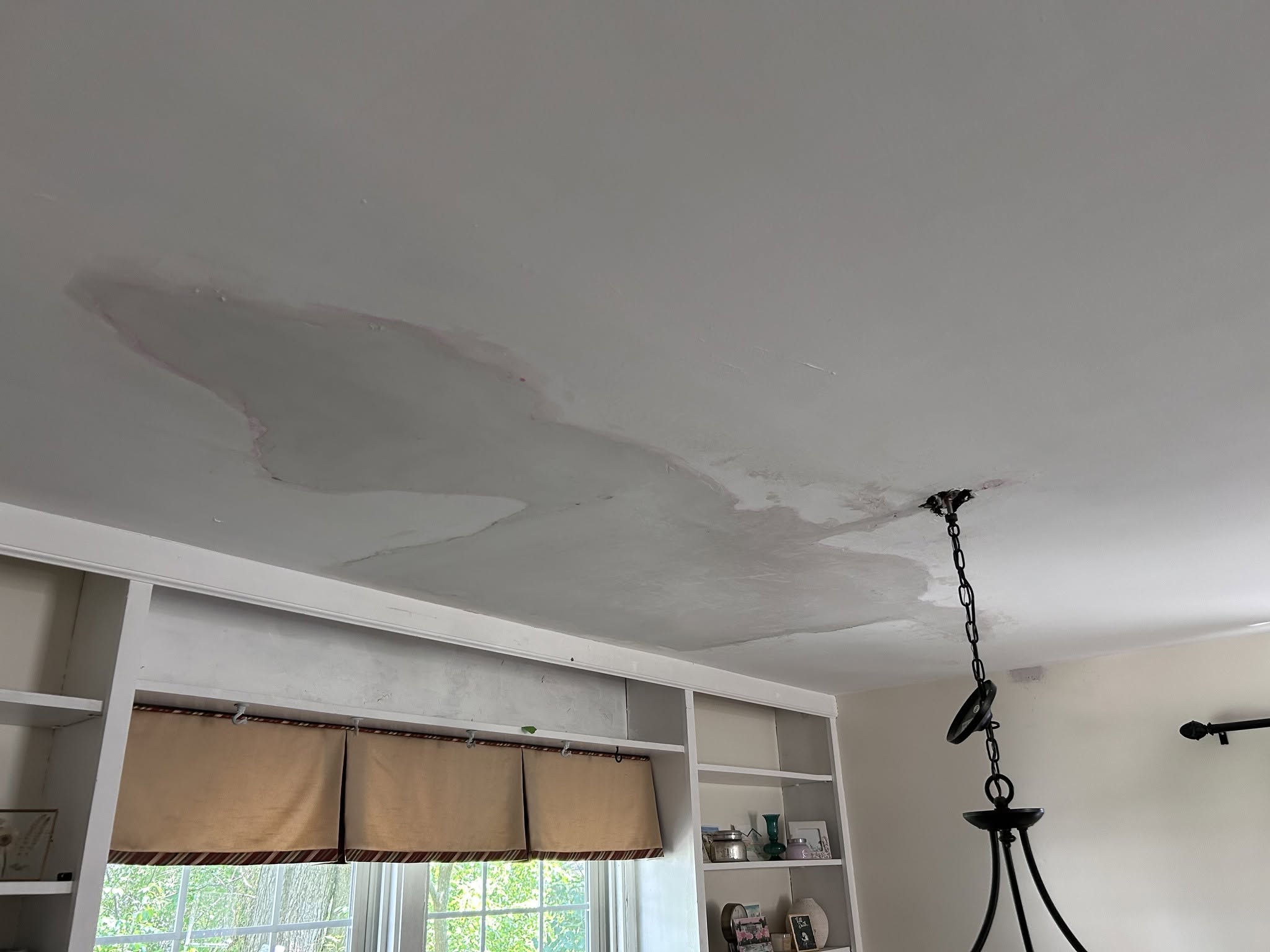 A living room plaster ceiling restoration after a water leak in this home in Snyder NY. - June 12, 2026.
Plaster and drywall are not interchangeable names for the same surface. They are completely different wall and ceiling systems. They move differently, accept paint differently, and require different repair methods. And unlike drywall, plaster is nearly kid-proof. A wall or ceiling restoration should begin with the substrate that is already in the home, instead of introducing a new one because it is easier.
Depending on when your house was built, will largely determine whether it is plaster or drywall. Homes in Western New York built prior to 1940 are most likely woodlath plaster, 1940-1960 are largely rocklath plaster and if your house was built after 1965 it is almost gaurenteed to be drywall.
Popcorn ceilings are especially common in drywall homes because it is cheaper to spray popcorn texture versus properly finishing drywall ceilings when the house was built. We also remove popcorn ceiling texture; our process of removal is more involved than many, but results in smooth ceilings with a level 5 finish.
We routinely document the restoration of water-damage and efflorescence, plaster bulges, cracks, blown-out plaster, surface refinishing, and preparation for decorating.
Explore plaster repair servicesRepairing holes, water-damage, failed seams, impact damage, previous patches, nail-pops, and sections that require replacement is part of our daily routine.
Explore drywall repair servicesWe specialize in the restoration of plaster and drywall ceilings. Addressing problems like sagging, impact damage(from below and above; like stepping through a ceiling), matching texture. We finish the project by priming and repainting the entire ceiling, even if it's a Forever Ceiling.
Extensive ceiling repair servicesRemoving damaged material after the leak has been corrected, repairing the wall or ceiling, sealing stains, and restoring the finish. We often follow behind mitigation companies. Don't wait until they are done to call us.
Explore water-damage repairWe frequently follow behind mitigation companies that handle mold, asbestos, and lead. Their job is to remove hazardous materials safely. Once the mitigation or abatement work has been completed, we are who to call to restore the room by repairing or replacing the damaged plaster and drywall, priming the new or repaired surfaces, and repainting the affected walls and ceilings. This is a turn-key service.
Explore texture repairWe paint over 95% of our repairs for our clients. This involves proper primer selection, stain blocking, and complete repainting so the repaired area becomes a memory.
Explore interior paintingDrywall can be used successfully in many plaster repairs, but it is not automatically superior simply because it is newer or easier for a contractor to install and finish. A drywall patch in a plaster ceiling or wall often creates a flat spot in a surface that was finished by hand- drywall panels are made in a factory and are dead-flat. This can also cause cracks to appear around the edges of a patch due to hardness and density differences between the two materials. This is why its generally better to repair plaster with plaster and drywall with drywall.
Seasonal humidity and temperature changes, road vibration (that manhole in front of your house), framing movement, and high winds can expose the transition between a drywall patch abd a plaster system over time. The result may be a crack, ridge, shadow line, or visible change in texture surrounding the patch.
The correct repair method depends on the ceiling or wall in front of us. Sometimes that means restoring plaster with plaster. Sometimes it means integrating drywall into the existing system. Sometimes the damaged area has failed to the point that replacement is the better path. Restoration begins with a proper diagnosis, not a preferred material.
| Question | How We Approach Restoration |
|---|---|
| What is the substrate? | We identify whether it's plaster, rock lath, wood lath, or drywall. |
| How far has the damage spread? | Trace loose, cracked, bulging or delaminated material beyond the visible area. |
| Can the original material be preserved? | We stabilize (both mechanically and chemically) and rebuild the surrounding material whenever possible. |
| How will the repair be finished? | Plan for texture matching, type of primer, paint sheen, and the visibility of transitions from the start. |
Many restoration and repair companies stop at the substrate. Many painting companies begin after the substrate has already been repaired. That leaves the homeowner coordinating separate contractors and hoping each stage is compatible with the next.
At Carrigan Painting we complete the repair and the painting under one company, one crew, from the start to the finish. The material choices, finish level, texture, primers, and paint systems are planned as one continuous restoration project rather than disconnected pieces of a larger puzzle. This unique skillset is rare in this space.
We identify the original substrate, previous repairs, potential movement, moisture history, and the true extent of failure, preferrably during the estimate.
Loose, delaminated, cracked, or water-damaged material is addressed before new material is installed.
The repair method is selected around the existing substrate, required thickness, texture, and expected decorating requirements.
New plaster, drywall compound, stains, exposed paper, and previous coatings all require different primers.
The wall or ceiling is finished as one surface.
The material list changes from project to project because the homes and failures are not the same. Depending on the age of the home, materials may include:
Restoration does not mean saving every square inch regardless of condition. It means making an experienced decision about what can remain, what should be stabilized, what must be removed, and what materials should replace it. This can and sometimes does change once a project is started. We adapt and overcome challenges as they arise.
Restoration is measured by the outcome, not by how much material remains. Some projects require only minor repairs. Others require partial reconstruction, and some ceilings must be completely replaced after structural failure. The goal is always the same: restore the room to a safe, durable, occupiable condition.
Loading restoration case studies from The Carrigan Archives…

We actively document real-world conditions, challenges, professional repair methods, and the results.
Visit The Carrigan ArchivesThese are the questions that usually determine whether a wall or ceiling should be repaired, rebuilt, or replaced.
At Carrigan Painting we restore plaster and drywall almost on a weekly basis. After the messy part is done, we then prepare the restored surface for decorating by using the appropriate primers in the correct order. This ensures that even if the client chooses to paint the space themselves, they have the peace-of-mind that they can decorate however they wish. However most of our clients prefer we complete the painting too.
Request an Estimate Call Carrigan Painting